EN
EN  NL
NL  DE
DE  PL
PL 
A fresh start with the Phlebodium
The cold days of February are the perfect excuse to bring some greenery into your home. And what could be better than a plant that not only adds ambiance but also contributes to a healthy living environment? The Phlebodium, also known as the Blue Fern, is our air-purifying plant of the month for February 2026. This charming plant is a unique addition to your plant collection and therefore deserves a prominent spot in your home.
What makes the Phlebodium so special?
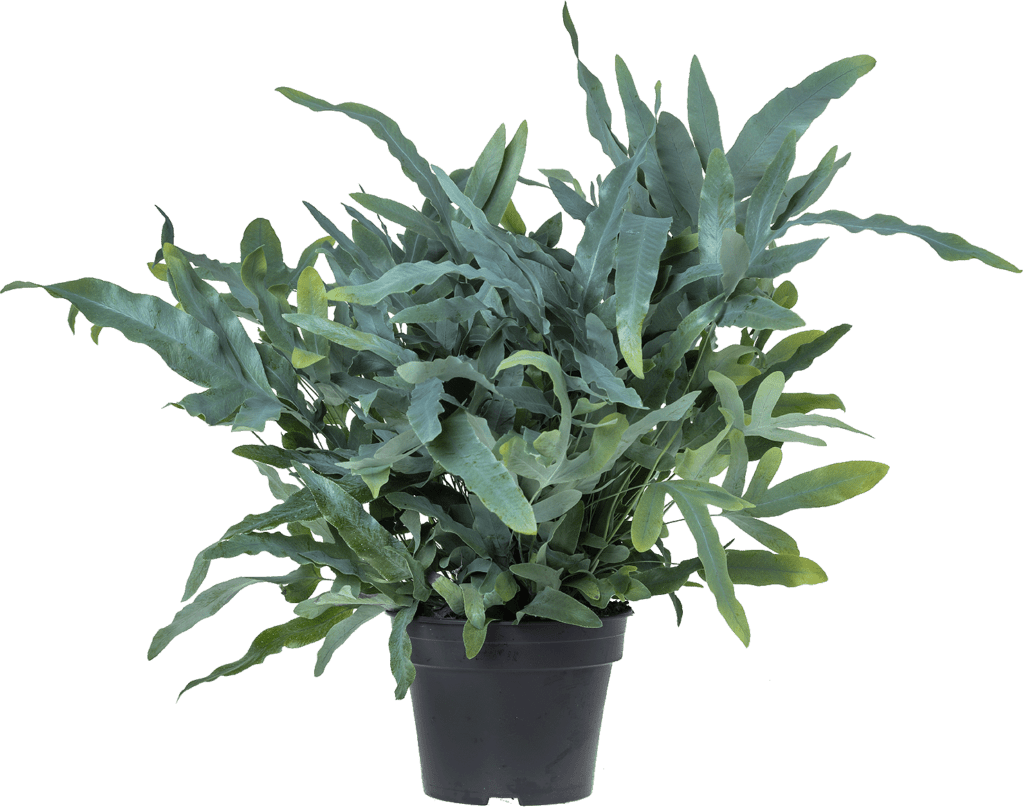
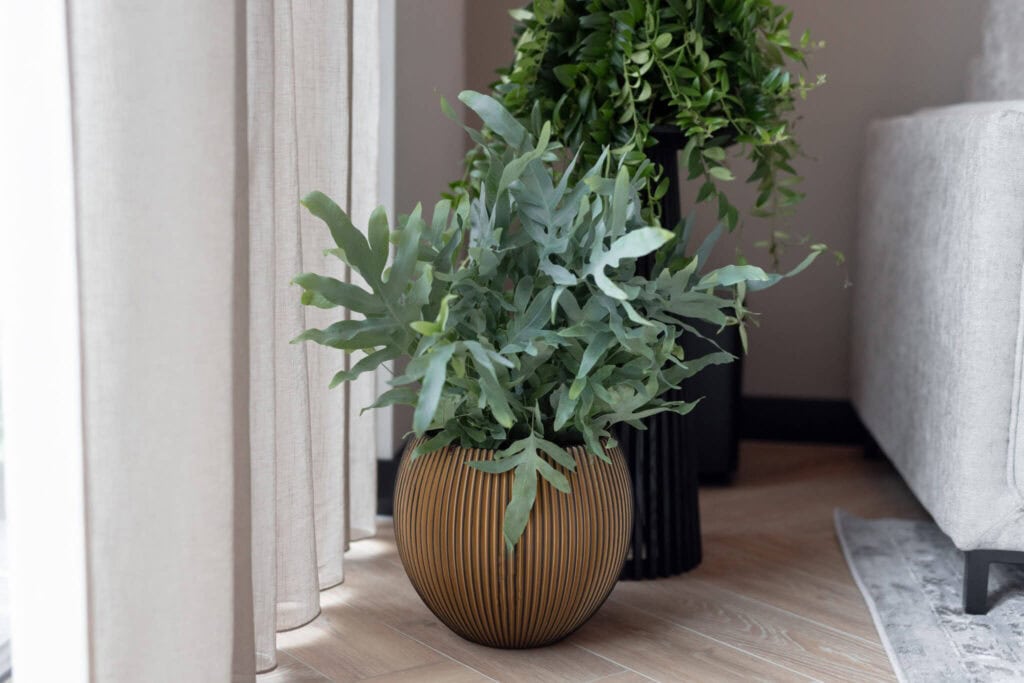
The Phlebodium is a unique fern with wavy leaves that range in color from blue-green to silvery gray. This gives the plant an elegant yet contemporary look. In addition to its beautiful appearance, this plant also acts as a natural air purifier. Like all our other plants, the Phlebodium is known for its ability to filter harmful substances from the air, such as formaldehyde and benzene, and to improve humidity. This Air-Purifying Plant of the Month for February is therefore perfect for the cold winter months when the heating is running at full blast and the air indoors is often drier.
Origin of the Phlebodium
The Phlebodium originates in the tropical and subtropical rain forests of Central and South America. Here it grows on trees or rocks as an epiphyte, which means it does not need soil to survive and is usually in the shade. Therefore, prefer to put the Phlebodium (Blue Fern) in the shade at home as well.

Species of Phlebodium
As a houseplant, you will generally only come across two types of Phlebodium: the Phlebodium Blue Star and the Phlebodium Davana.
The Phlebodium Blue Star is the most well-known Blue Star fern and is available in seven different pot sizes, ranging from p9 to p26. Its soft leaves create a striking visual contrast. The Blue Star is a strong fern that, with the right care, will stay with you for a long time.
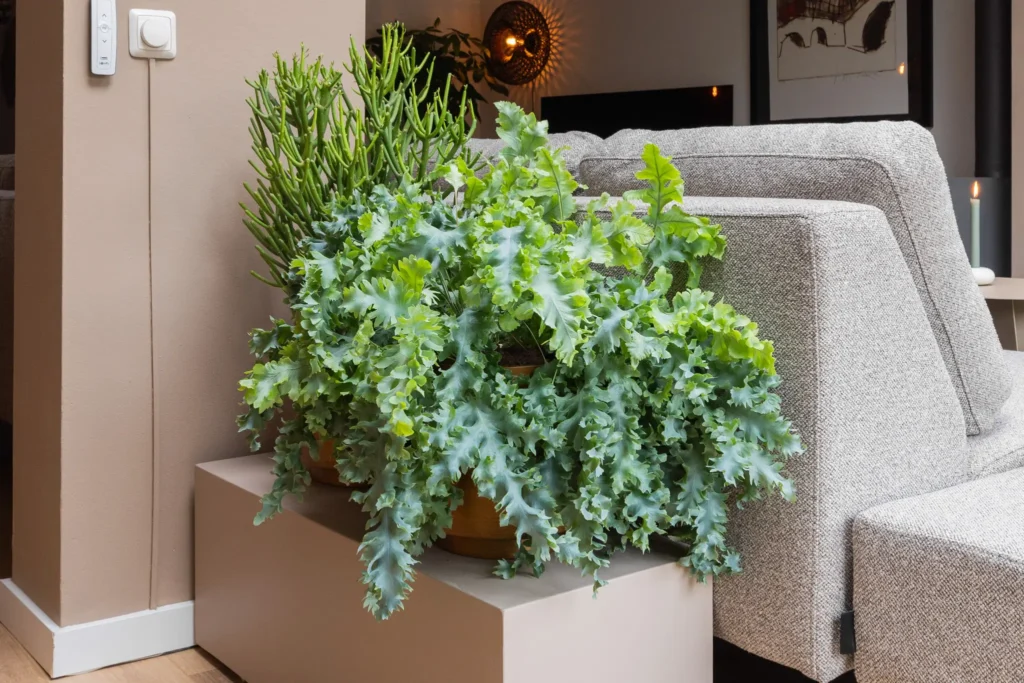
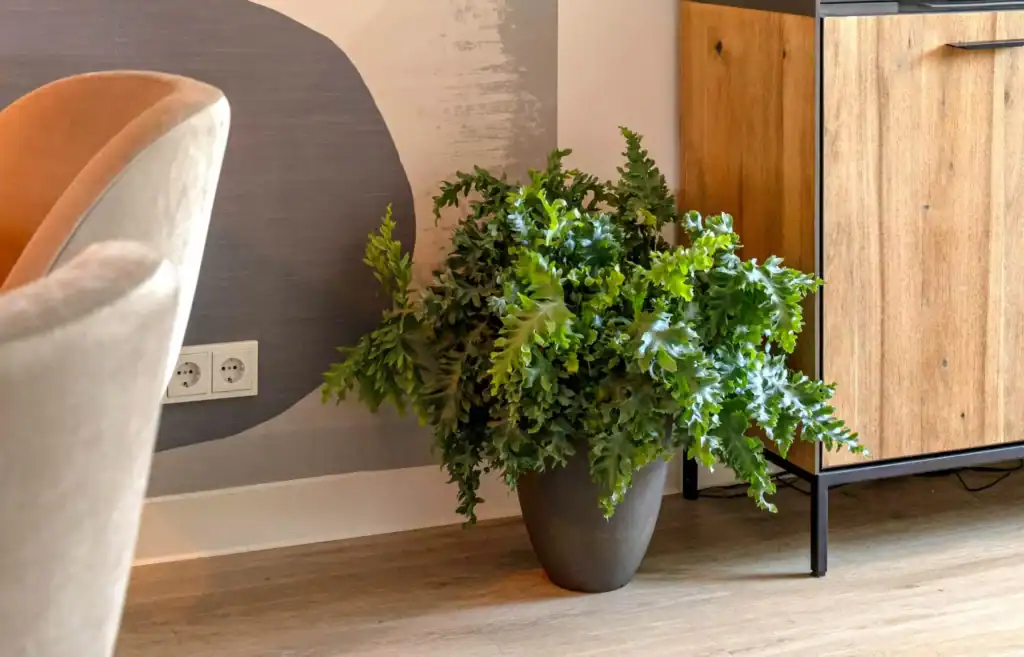
The Phlebodium Davana is a blue fern with serrated, blue-green leaves. This Blue fern was discovered among the Blue Star by our member Raadschelders Ferns. After years of breeding and selection, the grower then introduced this species as the Davana®, named after the three daughters of the owner. In 2020, this Phlebodium Davana also won the Glass Tulip, a prestigious award for exceptional and innovative plants.
Growers of the Phlebodium
The Air-Purifying Plant of the Month for February is grown by two of our members , each with their own strengths and specialties. They grow the Phlebodium in different varieties and pot sizes. This makes it easy to choose a size that fits your space, whether it fills a small corner or occupies a more prominent spot.
Kwekerij Barreveld grows the Phlebodium Blue Star in two pot sizes: 14cm and 17cm. Barreveld's Phlebodium Blue Star is known for its high quality and long shelf life. In addition to the Phlebodium, Barreveld is also active in tub plants and other seasonal plants.
Raadschelders Varens grows the Phlebodium Blue Star in five pot sizes: 9cm, 12cm, 17cm, 19cm and 26cm. In addition, they also grow the Phlebodium Davana in five pot sizes: 9cm, 12cm, 17cm, 20cm and 26cm. Raadschelders Ferns is the expert in the field of ferns. Besides the Phlebodium they also grow for Air So Pure the Adiantum, Asplenium, Blechnum, Didymochlaena, Dryopteris, Nephrolepis and Pteris.
Care tips for the Phlebodium
Low maintenance and diverse: that's the Phlebodium! One of the biggest advantages of the Phlebodium is that it is an easy plant to care for. With a little attention, it will stay healthy and beautiful for a long time. The Blue Fern, like all the other plants in the Air So Pure range, has the ability to improve air quality. Here are some care tips for the Phlebodium:
- Light: Place the plant in an area with indirect light. In fact, in its natural habitat, the Phlebodium lives in the shade. If you place it in direct sunlight, the leaves may burn.
- Watering: Keep the potting soil slightly moist, but avoid placing the plant with its roots in water. A weekly watering is usually sufficient. In doing so, it is important that you water through the sides of the pot, so not in the middle of the plant. This way you avoid a bare heart.
- Temperature: The Phlebodium likes a pleasant room temperature between 15 and 25 degrees Celsius.
- Fertilizer: : Just like people, plants also need nutrition. Therefore, in spring and summer, give some plant food to the Phlebodium (Blue fern) once a month. This will keep it beautiful and healthy.
- Humidity: The plant appreciates high humidity, but spraying is not necessary. When you spray the plant with water the blue-gray color will disappear and the leaves become greener.
- Pruning: It is not always necessary, but when you find the leaves of the Phlebodium getting too long, you can trim the plant a little.
Is the Phlebodium poisonous?
No, the Phlebodium is not poisonous! If you have pets or small children, it is always important to check if your houseplants are poisonous. If poisonous plants are ingested, allergic or irritant reactions can occur. Fortunately, the Phlebodium is non-toxic and therefore completely safe for cats, dogs, and other pets.
Will there be flowers on the Phlebodium?
No, the Phlebodium does not produce flowers. As a fern, it does not bloom like flowering plants. Instead, it reproduces through spores that are visible on the underside of its leaves. These spores appear as small, round, brown or orange dots and are part of the fern’s natural reproduction process. Although the Air-Purifying Plant of the Month for February does not flower, its elegant and unique leaves make it a beautiful addition to your interior.
Styling tips for the Phlebodium
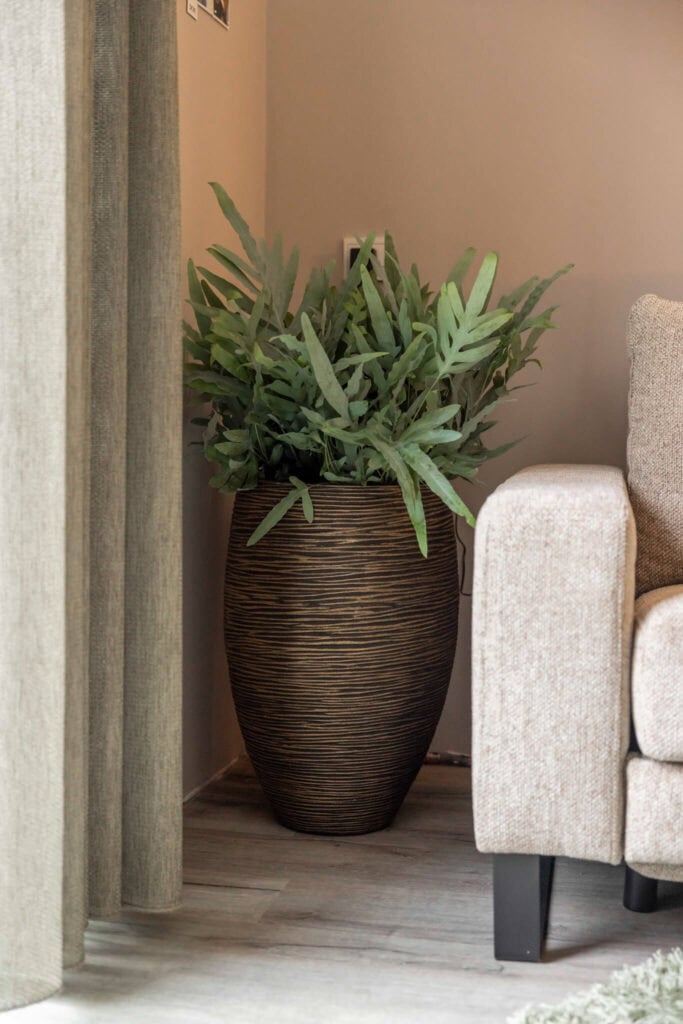
Thanks to its wavy leaves, the Phlebodium is a real eye-catcher in your interior. Place it in a stylish ceramic or reed pot to enhance its natural look. Place the plant on a sideboard, hang it in a plant pendant or combine it with other green plants for an urban jungle effect. Thanks to its versatility, the Phlebodium fits into almost any interior style, from modern to bohemian.
Bonus tip: place the Phlebodium Davana in a pastel-coloured decorative pot for a soft, elegant look. Perfect as a Valentine’s gift.

A good start with the Phlebodium
February can feel cold and dark, and many good intentions have already faded. In other words, the perfect moment to bring a plant into your home that contributes to a healthier and more beautiful living environment. With the Phlebodium, you’re not only adding a unique and decorative plant, but also a healthy companion that supports a better indoor climate. So add the Air-Purifying Plant of the Month for February to your wishlist today.
Enjoy nature indoors and experience the benefits of air-purifying plants, such as increased creativity, productivity, and focus. Use our store locator to find all participating shops offering the Phlebodium and bring home your Air-Purifying Plant of the Month for February today.