EN
EN  NL
NL  DE
DE  PL
PL 
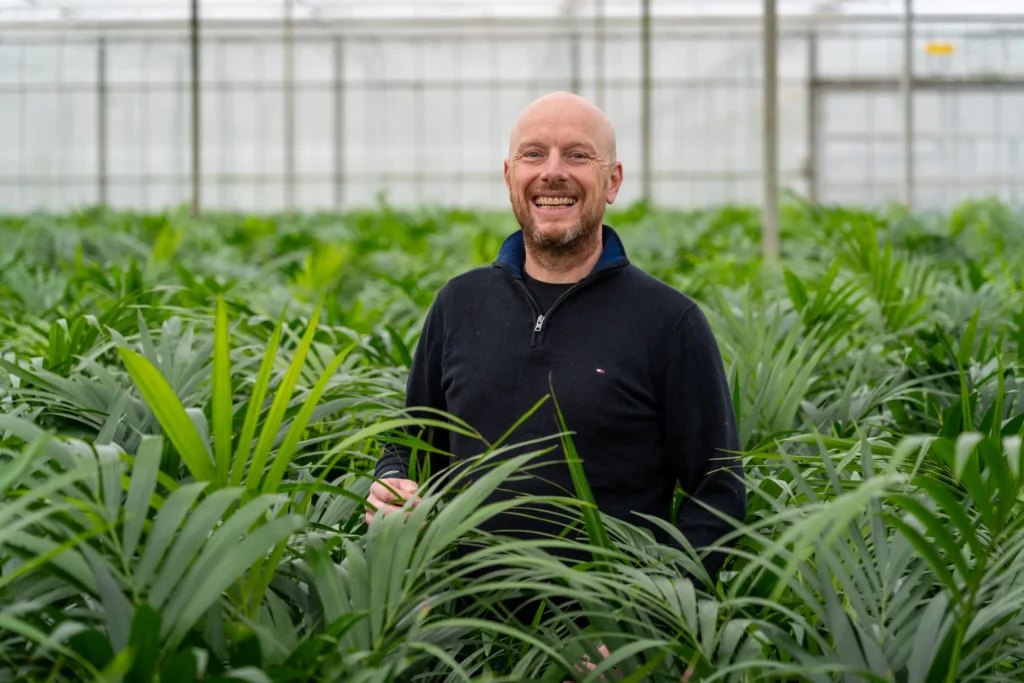
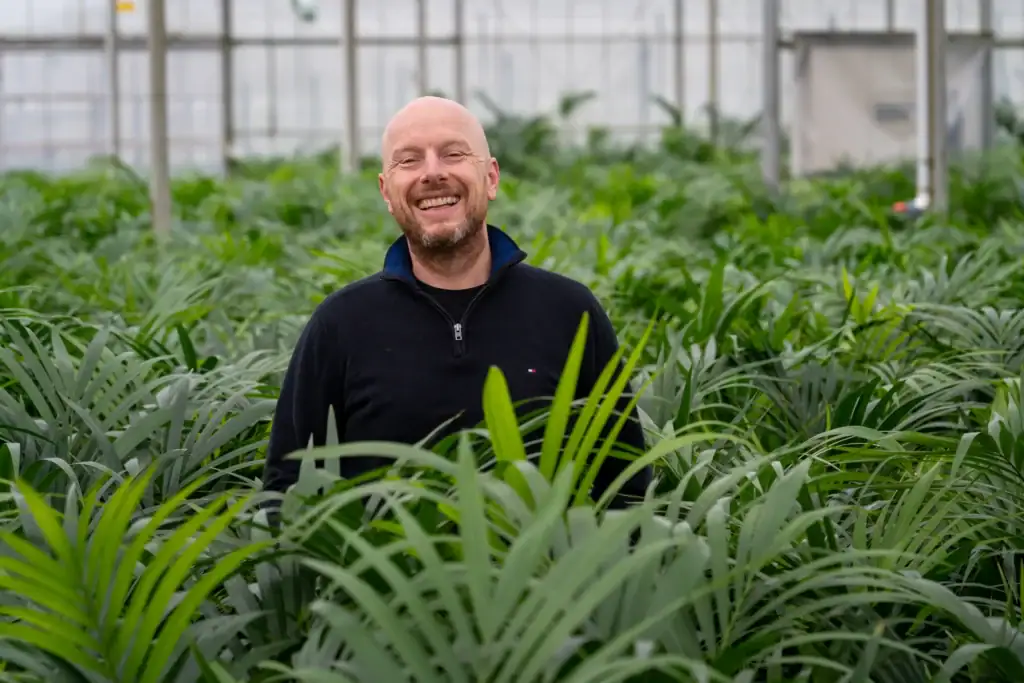
Interview with Christian Blom, co-owner of Blom KENTIA Palms and former board member of Air So Pure
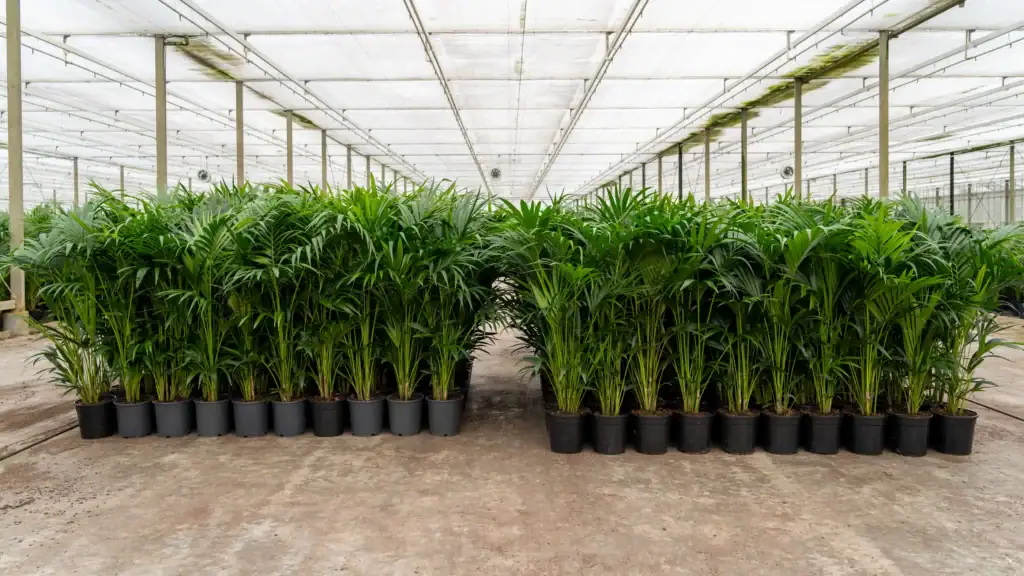
The Kentia (Howea forsteriana) is known as an elegant, strong houseplant that lasts for years. At Blom KENTIA Palmen, everything has revolved around this palm for more than fifty years. Together with his brother Paul, Christian runs the family business from a single location of nearly six hectares, where the Kentia is central: from young plant to mature specimen.
In this interview, Christian shares his view on the added value of Air So Pure, why specialisation is their strength, and how Blom KENTIA Palmen works towards sustainable and resilient cultivation. He also explains why the Kentia is, in his opinion, one of the most valuable plants for the home.
Air So Pure as added value
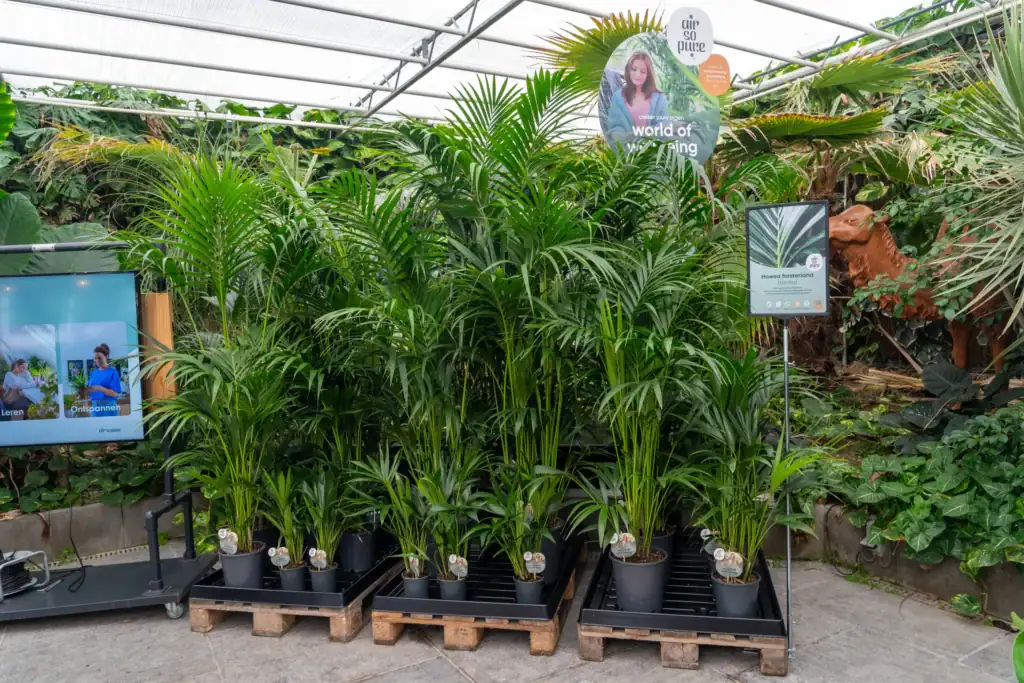
Blom KENTIA Palmen has been a member of Air So Pure since 2018. Within the growers’ association, the company supplies the Kentia in seven different pot sizes. According to Christian, the plant fit the Air So Pure concept perfectly from the start.
“Our plant immediately matched the (air-purifying) story,” he explains. “Kentias are strong, healthy plants. Many of our customers were already working with Air So Pure, and we saw an opportunity in that.”
Although Blom KENTIA Palmen was already a well-established name, the membership made the Kentia even more visible in the market. “You’re more easily recognised by customers. That helps, of course. In the end, it leads to more sales.”
Christian also notices that being part of the collective opens doors that can be harder to access individually. He mentions visits to larger retail organisations as an example. “If you show up on your own, it’s not easy to get in. But when you come as part of Air So Pure and tell the story behind it, people listen.”
The strength of the collective
According to Christian, that strength lies mainly in the shared story. By working together as a group of growers a stronger message is created for the market. “Together, you’re stronger than on your own, and you also learn from each other.”
One example he appreciates is the shop-in-shop, concept, where Air So Pure plants are presented in garden centres with their own display and POS materials. “What we started at TC Ockenburgh and what you now see at places like TC Leurs, I think that’s great. It clearly shows how the organisation is developing and how the brand is growing.”
Taking initiative yourself
At the same time, Christian emphasises that membership does not automatically lead to success. According to him, members need to stay actively involved and take initiative. “You can really benefit financially and improve your margins. But you have to put something into it. It only works if you invest your own energy.”
That is also why Christian chose to be actively involved in the Air So Pure board for many years. “I had ideas about how things should be done. You can stay on the sidelines, but I believe you should take responsibility. If you want to have a say, you also need to be willing to contribute.”
For Christian, the added value is clear. “Being part of Air So Pure definitely opens doors.”
Full focus on Kentia
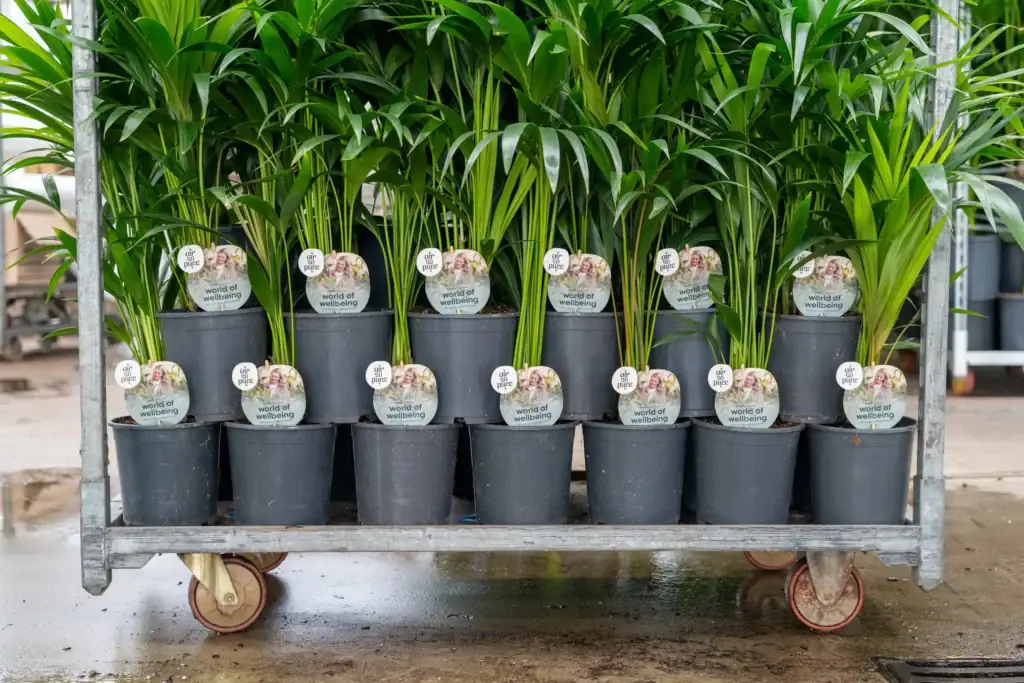
After discussing the collaboration, the conversation naturally shifts to the company itself. Blom KENTIA Palmen is fully specialised in one plant: the Kentia. This is a conscious choice. “We strongly believe in specialisation. We focus on doing one thing really well. That’s our KISS method: keep it simple. Better to do one thing extremely well than everything just a little.”
By focusing on a single product group, the company can optimise all processes. From cultivation to selection and quality. “Everything here revolves around that one palm.”
“The Bloms make Blom”
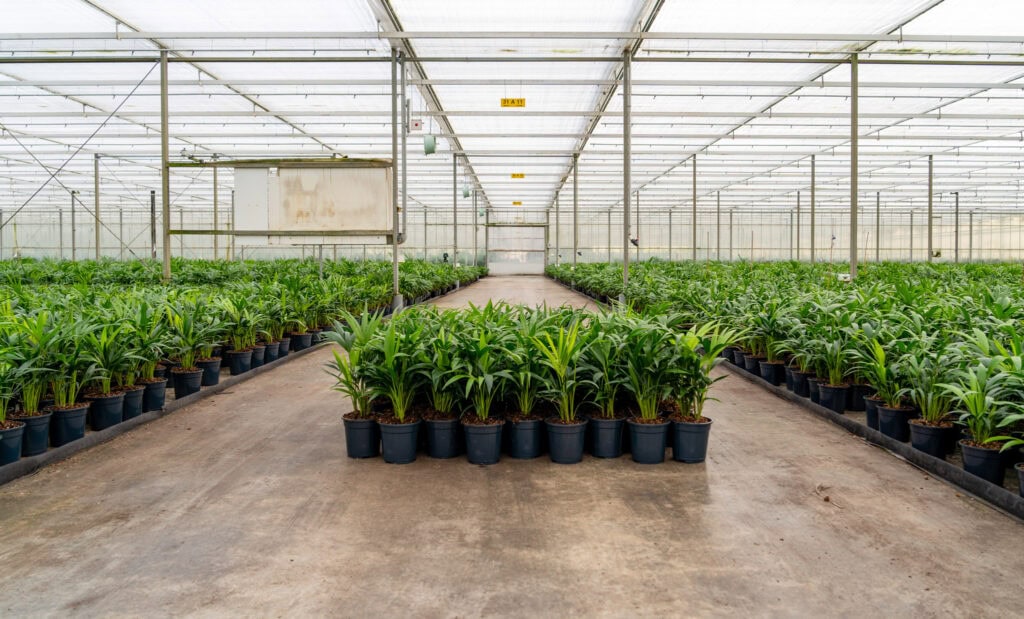
Blom KENTIA Palmen is a true family business. It was founded in 1971 by the father and uncle of Christian and Paul Blom. In 2003, the brothers took over the company.
Today, they run the business together, each with their own role. “Paul focuses more on the numbers and administration. I’m more involved in strategy and customers. Together, we set the direction.”
The company employs around twelve permanent staff members, supported by temporary workers. In total, the team consists of eighteen people. According to Christian, the people are a key factor in their success. “The people make the company. We often say: the Bloms make Blom.”
Sustainable cultivation as a starting point
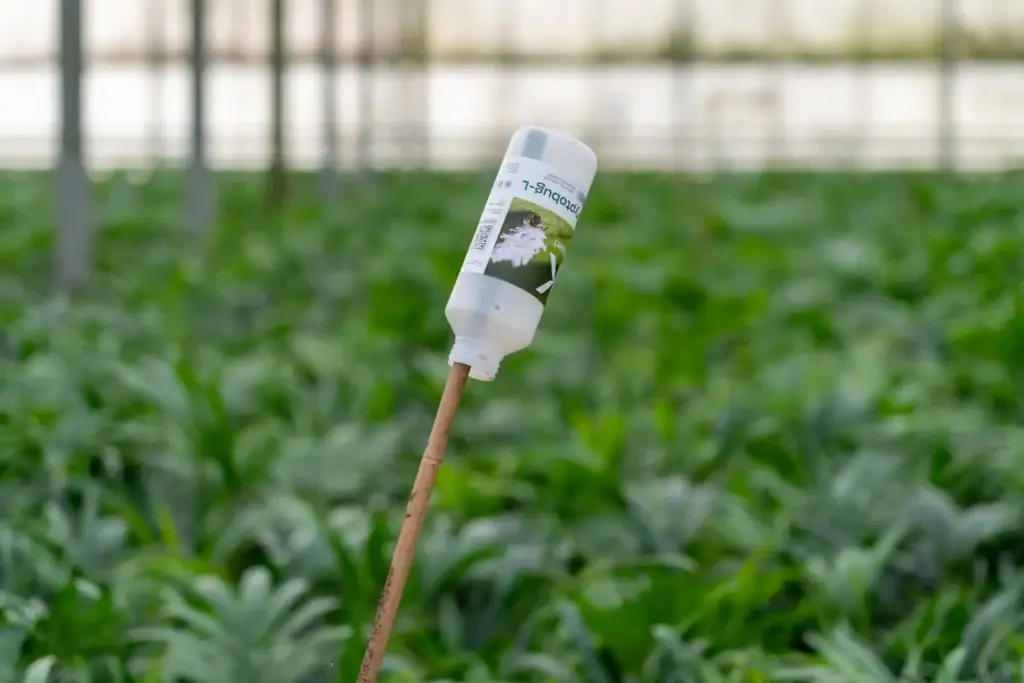
Blom KENTIA Palmen has been working towards more sustainable cultivation for many years. By 2026, the goal is to grow entirely using biological crop protection. A goal that aligns well with the sustainability ambitions of Air So Pure.
Steps have also been taken in the use of potting soil. The substrate used has been more than 75% peat-free for years. “We truly believe in peat-free growing. It works well, and the quality of the plants even improves.”
According to Christian, a natural way of growing leads to a better plant. “If you stay away from chemicals, you get a more resilient plant.” He compares it to human health. “Too much medication doesn’t make you healthier either.” That is why plants at Blom are not pushed with extreme temperatures or intensive lighting. “The plant is central.” “The plant comes first.”
“The plant comes first.”
The company has also been using solar panels and energy-efficient greenhouses for years. Gas and water use are kept to a minimum. “For us, that’s not new anymore. We’ve been doing this for years.”
Quality over quantity
While many companies in the sector focus on expansion, Blom KENTIA Palmen focuses on quality. “We’re not aiming to grow in size. We focus on better and more resilient plants.”
According to Christian, the biggest challenge is maintaining sustainable cultivation. “That always requires attention.” Major new innovations are not currently planned. “We focus on continuing to do this well.”
Within the Air So Pure assortment, quality also plays an important role. According to Christian, the difference between a standard Kentia and an Air So Pure Kentia lies mainly in selection. “For Air So Pure, we only select the very best plants.”
A plant that takes time
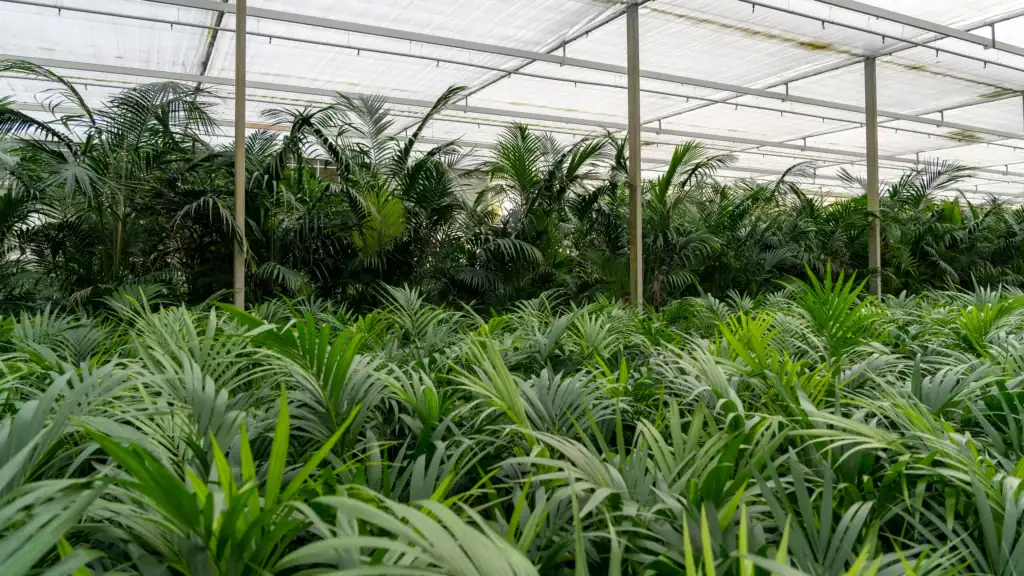
Kentias grow slowly. That requires patience and careful planning. Blom KENTIA Palmen imports both seeds and germinated seeds from Australia. From there, the palms grow in the greenhouse at an average of about one centimetre per week.
This means that a one-metre plant has already spent around two years in the greenhouse. “It’s a plant that really takes time.” This slow growth results in a strong, full, and well-shaped plant.
Some growers develop a bond with plants that stay in the greenhouse for so long, but Christian remains down-to-earth. “They’re beautiful plants, but in the end we grow them to sell. We’re not a museum. 😉”
When asked about his favourite pot size, his answer is clear. “No. Big or small, I like them all. That’s why I have a Kentia in almost every room at home.”
Kentias around the world
After years of growing at Blom, the palms find their way to customers all over the world. Sometimes Christian hears where they end up. “You hear that they’re placed in palaces in Turkey, with the British royal family, or even in the Kremlin.” Those stories stay with him. “That’s always nice to hear.” He also regularly spots his Kentias on television. “I recognise them immediately.”
A rewarding plant
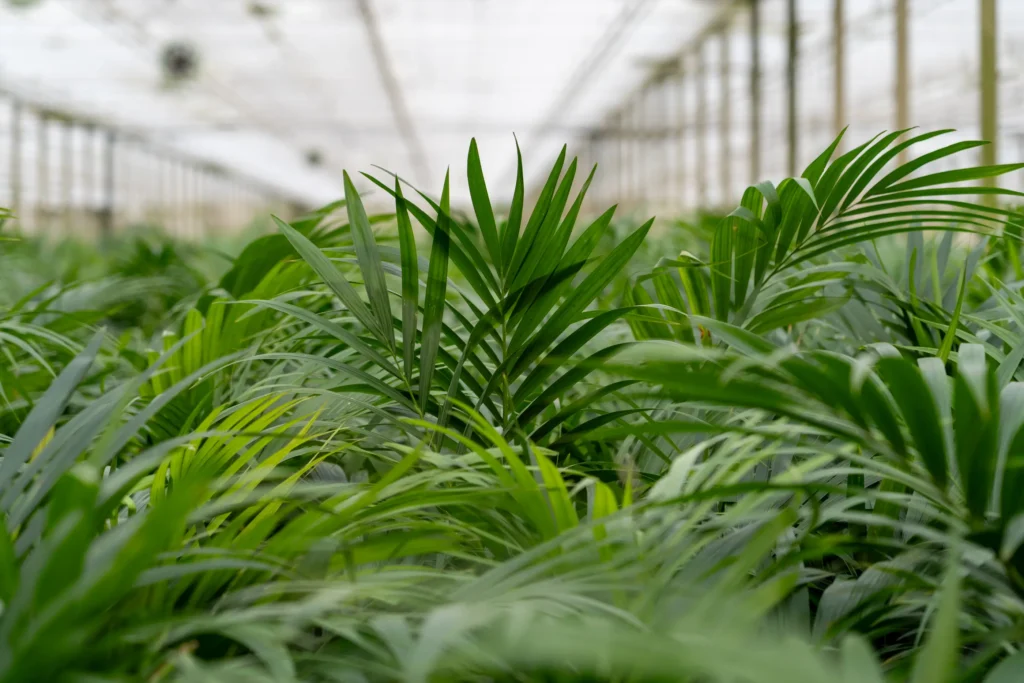
The Kentia is often described as one of the most durable and rewarding houseplants, mainly because of its long lifespan. “With a bit of care, you can enjoy it for many years,” says Christian.
According to him, care is quite simple. One important tip is to avoid placing the plant in direct sunlight. A spot with some shade works better. It’s also important to pay attention to the plant’s water needs. As a guideline, he suggests about one litre of water per metre of plant height per week. But ultimately, it’s about observing the plant. “Lift the pot and feel how heavy it is, or check the soil. That gives you a good idea of whether it needs water.”
Repotting is usually not necessary. Indoors, the plant doesn’t grow much taller but becomes fuller over time. “It grows wider and fuller, and only becomes more beautiful.” In an interior, the plant can become a real eye-catcher. “It’s almost like a piece of furniture. A jewel in your home.”
Proud of what has been built
When Christian reflects on the company, pride stands out most. “When I see the quality of our plants and where the company stands today, we are very satisfied.”
The company’s core values are clear: sustainability, honesty, and passion for the craft. Values that came through clearly in this interview.
“And just go for it.”
With that grounded mindset, Blom KENTIA Palms continues to work every day on strong and healthy Kentias. A palm that people can enjoy for years.
About Blom KENTIA Palms
Blom KENTIA Palmen is a family business based in Aalsmeer, fully dedicated to growing Kentia palms. Since 1971, the company has focused on strong, resilient, and sustainably grown plants, with great attention to quality and craftsmanship. From a single location of nearly six hectares, Blom supplies Kentias in various pot sizes to customers around the world.

Blom in numbers
- Founded in 1971
- Member of Air So Pure since 2018
- 1 location
- 6 hectares
- 18 employees
- 1 product group
- 8 pot sizes